
In today’s competitive manufacturing landscape, metal additive manufacturing (AM) offers companies a powerful way to improve performance, reduce lead times, and differentiate their products. At Elementum 3D, our advantage comes from more than 50 years of combined powder metallurgy expertise and breakthrough material science innovations that have enabled the commercialization of high-performance alloys previously considered unprintable.
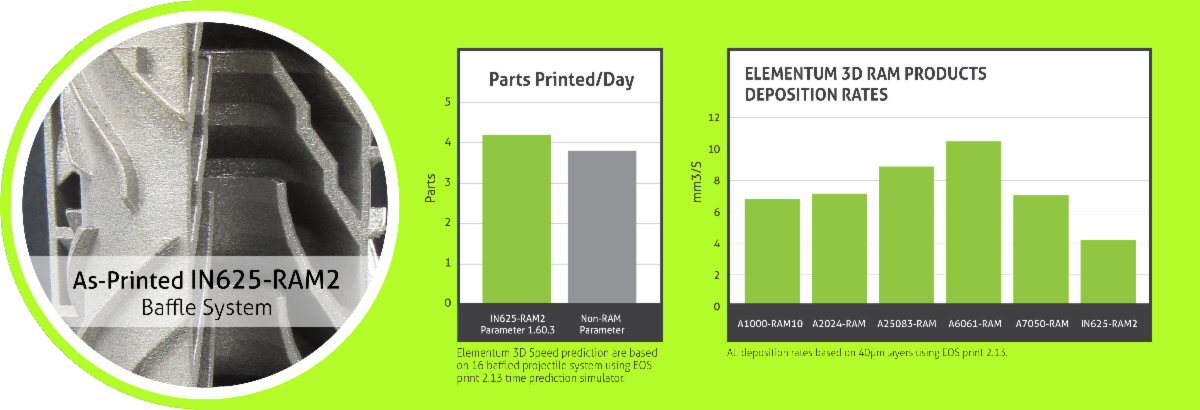
At its core, our patented Reactive Additive Manufacturing (RAM) technology solves the heat tearing and stress cracking challenges that have traditionally limited the additive manufacturing of widely used aluminum alloys such as 6061 and 7050. Combining RAM’s ability to alter the solidification process by creating stronger, equiaxed grain structures with optimized parameter sets, unlocks the full economic potential of additive manufacturing. Printability and consistency, which includes surface finish, and print speed, are improved to enable exceptional mechanical performance and manufacturing reliability compared with conventional non-RAM materials.
Surface Finish
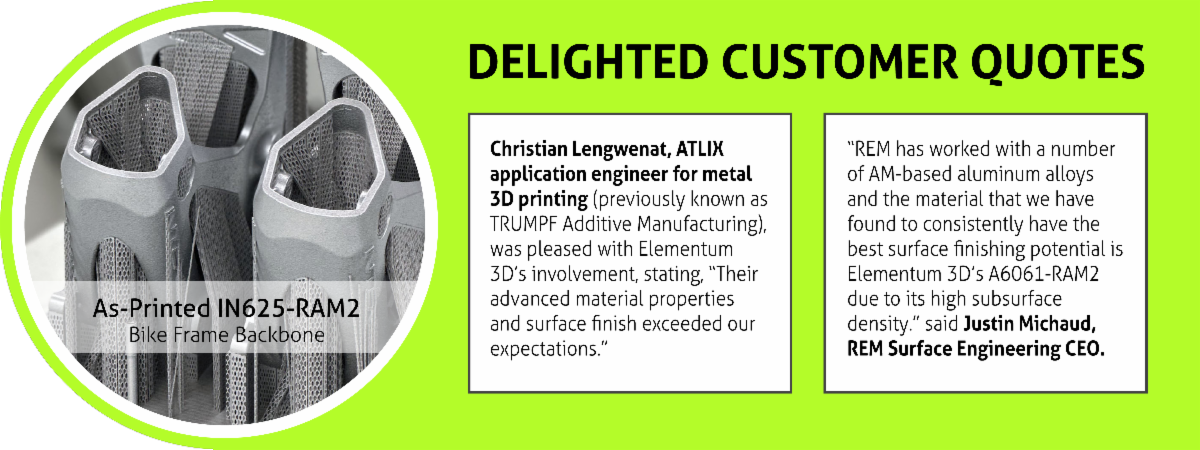
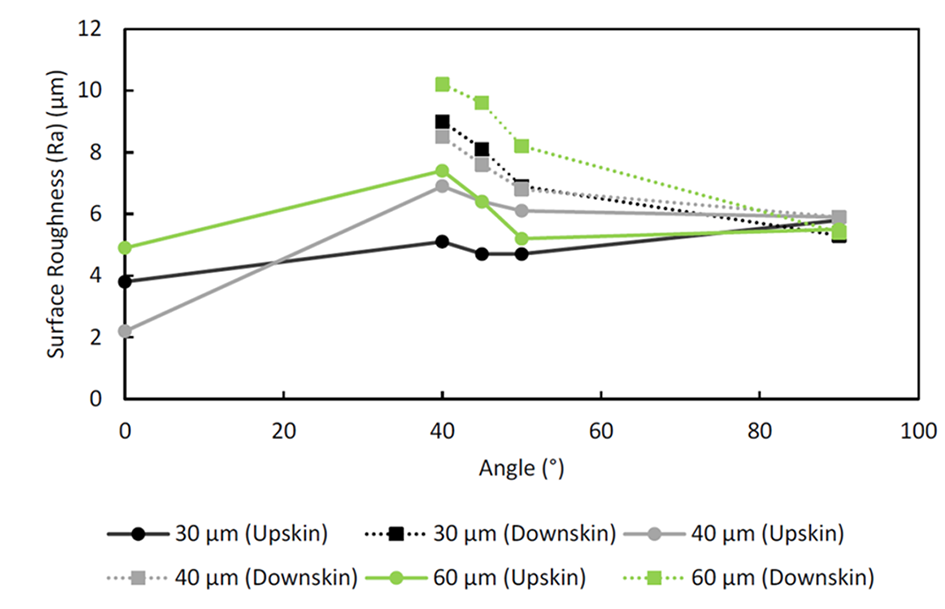 Low “as-printed” surface roughness offers significant manufacturing advantages, including reduced or eliminated post-processing steps, improved coating capability, increased flowability, reduced contamination buildup, and lower overall production costs. Elementum 3D’s optimized laser powder bed fusion (LPBF) build parameters produce surface finishes that rival the best in the additive manufacturing industry — making AM a more attractive alternative to traditional manufacturing processes.
Through extensive materials and process development, the Elementum 3D team achieved excellent surface roughness on upward-facing surface angles ranging from 90° to 40°, while maintaining high print speeds. Improved surface finish reduces post-processing expenses, enhances coating performance, and minimizes contaminant buildup.