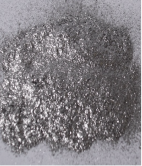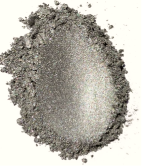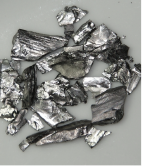

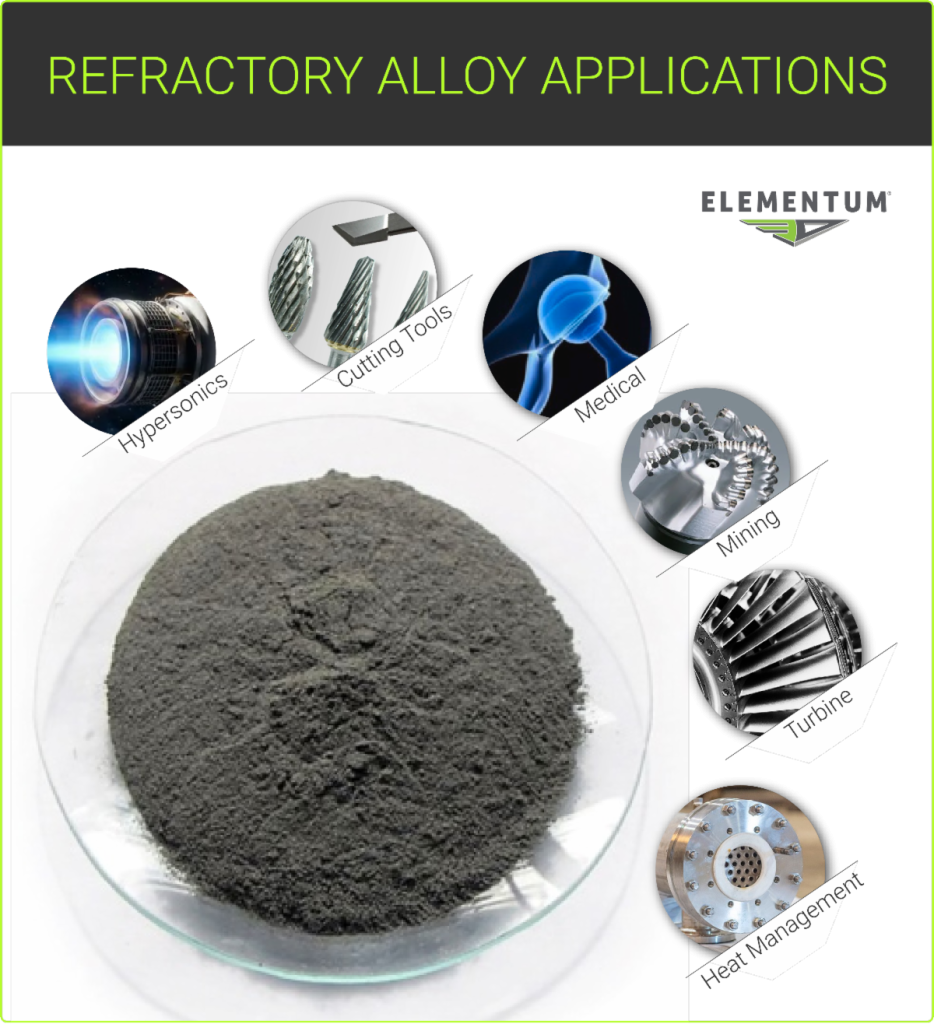
 The demand for complex, high-temperature parts made with refractory alloys is rapidly increasing across industrial sectors. Refractory metals such as rhenium (Re), tungsten (W), tantalum (Ta), niobium (Nb), molybdenum (Mo), and alloys thereof are widely used across biomedical, aerospace, space, electronics, and nuclear industries. These materials are valued for extreme high temperature capability, and selected refractories can also provide excellent corrosion resistance, electrical and thermal conductivity, high density, and radiation shielding and tolerance.
Leveraging Elementum 3D (E3D)’s 10+ years of additive manufacturing (AM) refractory expertise, we strive to inform and empower customers to innovate when developing mission-critical applications requiring refractory alloys, including rocket and advanced propulsion systems, industrial tooling, X-ray shielding, medical implants, energy production, and chemical processing equipment.
Advancement of E3D’s refractories include the execution of a Defense Advanced Research Project (DARPA) Small Business Innovation Research (SBIR) to develop the additive manufacturing (AM) feedstock and process capability to print rhenium using laser powder bed fusion (PBF-LB). This work included property collection at high temperatures and application performance testing. The project also demonstrated greatly reduced lead times for rhenium component production compared to legacy manufacturing methods.
Beyond rhenium, E3D is developing refractory alloys with improved performance, crack-free printability, and reduced costs. Alloys of tantalum (e.g. Ta-W) and tungsten (e.g W-Re) are seeing increasing interest as high performance metals are needed for space and nuclear energy applications demanding extreme temperatures and radiation resistance. The team is also developing in-situ deoxidization and inoculation strategies to mitigate microcracking in susceptible refractory alloys. Elementum 3D is also working on next generation niobium alloys that can outperform C-103 while reducing costs by eliminating the need for expensive hafnium. Increasing market prices for refractory metals further reinforces the need for lean additive manufacturing capability to maximize usage efficiency of these high-performance materials.
To learn more about our printable refractory alloys, contact at sales@elementum3d.com or visit www.elementum3d.com.